Essential Guide to Fire Extinguishers Types and Usage Tips
Stay prepared and safeguard your home or business! Our essential guide breaks down fire extinguishers, covering types and vital usage tips for safety.
Fire extinguishers are indispensable tools for safeguarding your property and ensuring the safety of its occupants. These devices are designed to combat different types of fires, each with unique characteristics and hazards. By understanding the basics of fire extinguishers, you can make informed decisions about which types to have on hand and how to use them effectively.
The primary function of a fire extinguisher is to put out small fires before they escalate into uncontrollable blazes. They are not intended to fight large fires but can be incredibly effective in the initial stages of a fire emergency. Knowing how to operate a fire extinguisher, as well as understanding the different types available, can make a significant difference in an emergency situation.
It's also crucial to remember that fire extinguishers are just one part of a comprehensive fire safety strategy. Regular maintenance, proper placement, and an understanding of fire safety protocols are equally important in ensuring a safe environment. By integrating these elements, you can create a robust fire safety plan that minimizes risks and maximizes preparedness.
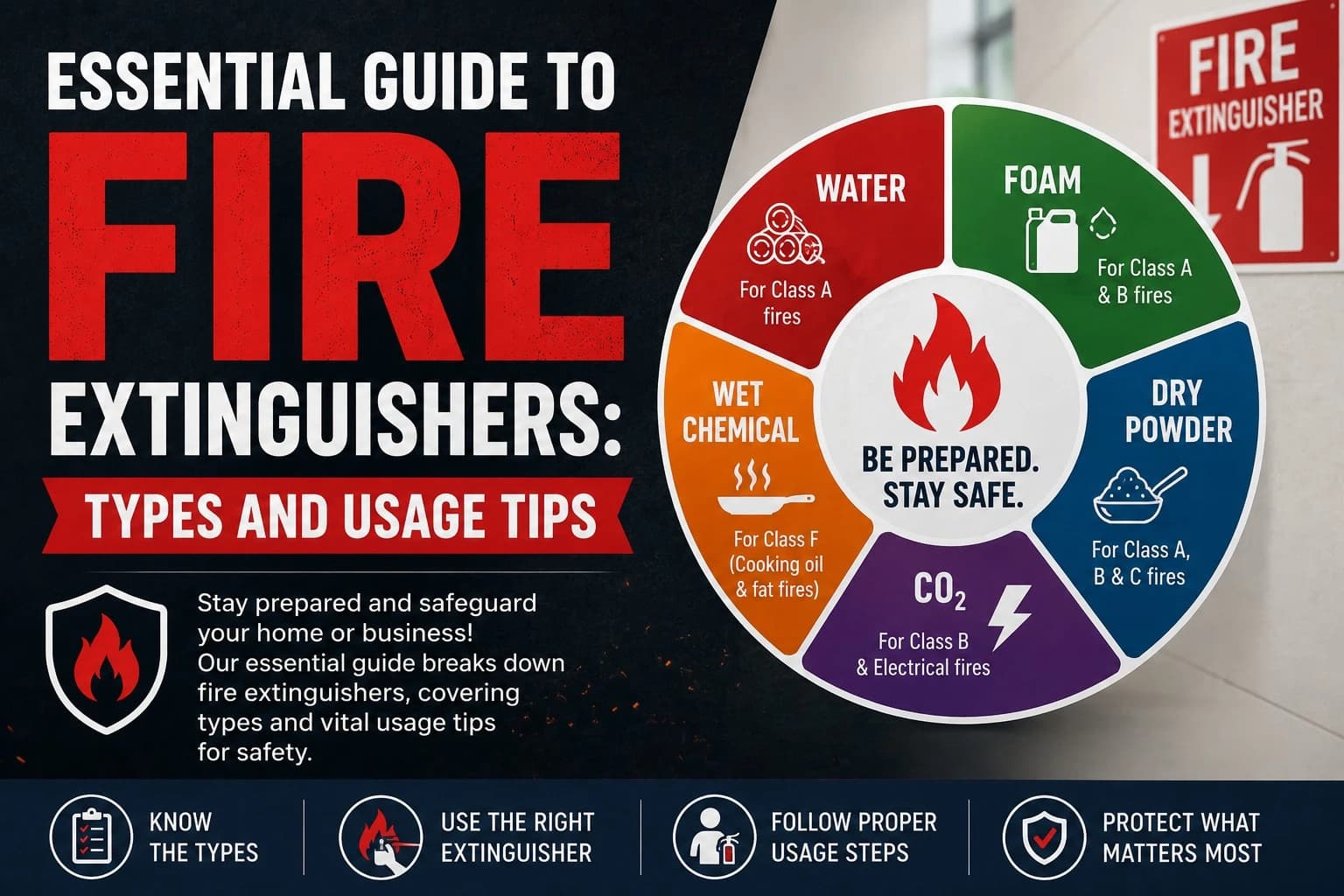
Fire extinguishers are classified into several types, each designed to tackle specific classes of fires. Understanding these classifications is essential for selecting the right extinguisher for your needs. The main types of fire extinguishers are water, foam, dry powder, CO2, and wet chemical.
Water fire extinguishers are among the most common and are suitable for Class A fires, which involve ordinary combustibles like wood, paper, and cloth. They work by cooling the burning material and are highly effective in environments where these materials are prevalent. However, they should never be used on electrical fires or flammable liquids.
Foam fire extinguishers are versatile and can be used on both Class A and Class B fires, the latter involving flammable liquids such as petrol, oil, and solvents. The foam forms a blanket over the burning liquid, cutting off the oxygen supply and preventing re-ignition. This makes them ideal for environments with a mix of combustible materials and flammable liquids.
Dry powder extinguishers are suitable for Class A, B, and C fires, which include flammable gases like propane and butane. These extinguishers work by interrupting the chemical reaction of the fire. While they are highly effective, they can leave a residue that may damage sensitive equipment, making them less ideal for use in areas with electronics.
CO2 fire extinguishers are designed for Class B and electrical fires. They work by displacing oxygen, effectively suffocating the fire. These extinguishers are ideal for use in offices and areas with a lot of electrical equipment because they do not leave any residue. However, they are not suitable for Class A fires and should be used with caution in confined spaces due to the risk of asphyxiation.
Wet chemical extinguishers are specifically designed for Class F fires, which involve cooking oils and fats. They work by forming a soapy layer on the surface of the burning oil, preventing re-ignition. These extinguishers are essential in commercial kitchens and any environment where cooking with large quantities of oil is common.
Selecting the right fire extinguisher involves understanding the specific risks present in your environment. Start by identifying the types of materials and equipment in your home or business that could potentially catch fire. This will help you determine which class of fire is most likely to occur and, consequently, which type of extinguisher is most suitable.
For homes, a multi-purpose dry powder extinguisher is often a good choice because it can handle various classes of fires, including those involving electrical equipment. However, if your home has a significant amount of electrical equipment, a CO2 extinguisher may be a better option due to its non-residual nature. In kitchens, a wet chemical extinguisher is essential for safely putting out fires involving cooking oils and fats.
In business environments, consider the specific risks associated with your industry. For example, in an office setting, CO2 extinguishers are ideal due to the high prevalence of electrical equipment. In industrial settings, where flammable liquids and gases are more common, foam or dry powder extinguishers may be more appropriate. Conducting a thorough risk assessment can help you make an informed decision and ensure that you are adequately prepared for any fire-related emergencies.
It’s also important to consider the size and number of extinguishers you need. Larger spaces may require multiple extinguishers placed at strategic locations to ensure quick access in an emergency. Additionally, ensure that the extinguishers you choose are easy to operate and that all potential users are trained in their use. This not only increases the effectiveness of the extinguishers but also boosts the overall safety of your environment.
Fire extinguisher ratings provide valuable information about the types and sizes of fires that a particular extinguisher can effectively combat. These ratings are typically displayed on the extinguisher label and consist of a combination of letters and numbers. Understanding these ratings is crucial for selecting the right extinguisher for your needs and ensuring that it is capable of handling the specific fire risks present in your environment.
The letter component of the rating indicates the class of fire the extinguisher is designed to fight. For example, an extinguisher labeled with an "A" is suitable for Class A fires involving ordinary combustibles, while a "B" rating indicates suitability for flammable liquid fires. A "C" rating means the extinguisher is appropriate for electrical fires, and a "K" rating signifies that it can handle kitchen fires involving cooking oils and fats.
The number component of the rating provides information about the extinguisher's effectiveness. For Class A extinguishers, the number corresponds to the equivalent amount of water the extinguisher holds. For example, an extinguisher rated 2A is equivalent to 2.5 gallons of water. For Class B extinguishers, the number indicates the square footage the extinguisher can cover. A 10B rating means the extinguisher can cover 10 square feet of a flammable liquid fire.
Understanding these ratings allows you to choose the most effective extinguisher for your specific needs. If you are uncertain about which rating is appropriate, consult with a fire safety professional who can provide guidance based on a thorough assessment of your environment. By selecting extinguishers with the right ratings, you can enhance your preparedness and ensure that you are equipped to handle any fire emergency that may arise.
Knowing how to properly use a fire extinguisher is just as important as having one on hand. The PASS technique is a widely recognized method for effectively operating a fire extinguisher. PASS stands for Pull, Aim, Squeeze, and Sweep, and following these steps can greatly increase your chances of successfully extinguishing a fire.
First, pull the pin located at the top of the extinguisher. This pin prevents the extinguisher from being accidentally discharged and must be removed before use. Next, aim the nozzle or hose at the base of the fire. Focusing on the base is crucial because it targets the fuel source, which is essential for effectively putting out the fire.
Once you have aimed the nozzle, squeeze the handle to release the extinguishing agent. Maintain a firm grip and apply steady pressure to ensure a continuous flow. Finally, sweep the nozzle from side to side while aiming at the base of the fire. Continue this sweeping motion until the fire is completely extinguished. If the fire reignites, repeat the process until it is fully out.
It's also important to remember that fire extinguishers have a limited discharge time, usually ranging from 10 to 25 seconds. Therefore, act quickly and efficiently when using an extinguisher. Additionally, always maintain a safe distance from the fire, and if it becomes uncontrollable, evacuate immediately and call emergency services. Regular practice and training can help ensure that you and others are confident in using a fire extinguisher when needed.
Even with proper training and knowledge, mistakes can happen when using a fire extinguisher. One common mistake is failing to read the instructions on the extinguisher before an emergency occurs. Each type of extinguisher may have specific operating procedures, and familiarizing yourself with these instructions beforehand can save valuable time during a fire emergency.
Another common mistake is aiming the extinguisher at the flames instead of the base of the fire. While it may seem intuitive to target the visible flames, this approach is ineffective because it does not address the fuel source. Always aim at the base of the fire to cut off the fuel supply and extinguish the flames more efficiently.
Additionally, many people underestimate the importance of maintaining a safe distance from the fire. Standing too close can put you at risk of injury from the heat and flames. Most fire extinguishers recommend standing about 6 to 8 feet away from the fire when discharging the extinguisher. This distance allows you to stay safe while effectively using the extinguisher.
Another pitfall is neglecting to ensure that the fire extinguisher is fully charged and in good working condition. Regular maintenance and inspections are essential to ensure that your extinguishers are ready for use when needed. Always check the pressure gauge and look for any signs of damage or wear. If an extinguisher is not in optimal condition, it may not function properly during an emergency.
Regular maintenance and inspection of fire extinguishers are crucial to ensure their reliability and effectiveness. Fire extinguishers should be inspected monthly and undergo professional maintenance annually. These routine checks help identify any issues that could compromise the extinguisher's performance and ensure that it is ready for use in an emergency.
During monthly inspections, check the pressure gauge to ensure that the extinguisher is fully charged. The needle should be in the green zone, indicating that the extinguisher is ready for use. Also, inspect the extinguisher for any visible signs of damage, such as dents, corrosion, or leaks. Ensure that the nozzle or hose is not obstructed and that the pin and tamper seal are intact.
Annual professional maintenance involves a more thorough examination by a qualified technician. This includes checking the internal components, verifying the weight and pressure, and conducting any necessary repairs or recharges. Technicians may also perform hydrostatic testing, which involves pressurizing the extinguisher to check for leaks and structural integrity.
In addition to regular inspections and maintenance, it's essential to keep a record of all checks and services performed on each extinguisher. This documentation helps ensure compliance with safety regulations and provides a history of the extinguisher's condition and maintenance. By staying diligent with maintenance and inspections, you can ensure that your fire extinguishers are always in optimal condition and ready to protect you in an emergency.
Proper placement of fire extinguishers is crucial for quick and easy access during an emergency. The National Fire Protection Association (NFPA) provides guidelines for the placement of fire extinguishers in both residential and commercial settings. Following these guidelines can help ensure that extinguishers are strategically located and readily accessible when needed.
In residential settings, fire extinguishers should be placed in key areas such as the kitchen, garage, and near exits. The kitchen is a high-risk area due to the presence of cooking equipment and flammable materials, making it essential to have a fire extinguisher within easy reach. The garage is another important location, especially if it stores flammable liquids or has electrical equipment. Placing an extinguisher near exits ensures that you have a clear escape route if the fire becomes uncontrollable.
In commercial settings, the placement of fire extinguishers depends on the specific layout and fire risks of the building. Extinguishers should be located along normal paths of travel and no more than 75 feet apart for Class A fires, 50 feet apart for Class B fires, and 30 feet apart for Class K fires. Additionally, extinguishers should be mounted on walls at a height that allows for easy access, typically between 3 to 5 feet above the floor.
It's also important to ensure that fire extinguishers are clearly visible and not obstructed by furniture or other objects. Signage can be used to indicate the location of extinguishers, making them easier to find in an emergency. Regularly review and update your fire extinguisher placement to account for any changes in the layout or use of the space. By following these guidelines, you can ensure that your fire extinguishers are optimally placed for maximum effectiveness.
Compliance with legal requirements for fire extinguishers is essential for ensuring safety and avoiding penalties. These requirements vary depending on the location and type of property, but there are common standards that apply to most residential and commercial settings. Understanding and adhering to these regulations can help you maintain a safe environment and meet legal obligations.
In residential settings, local fire codes often require a minimum number of fire extinguishers based on the size and layout of the home. For example, a two-story home may be required to have at least one extinguisher on each floor. Additionally, some jurisdictions mandate specific types of extinguishers for areas like kitchens and garages. It's important to check with your local fire department or building authority to determine the specific requirements for your home.
In commercial settings, the Occupational Safety and Health Administration (OSHA) and the NFPA provide guidelines for the number, type, and placement of fire extinguishers. OSHA requires employers to provide portable fire extinguishers and ensure that they are readily accessible and maintained in accordance with NFPA standards. The NFPA specifies the types of extinguishers needed based on the fire risks present and provides detailed guidelines for placement and maintenance.
Failure to comply with these legal requirements can result in fines, penalties, and increased liability in the event of a fire. Regular inspections and maintenance, as well as proper training for employees, are essential for meeting these standards. Additionally, keeping records of all inspections, maintenance, and training can help demonstrate compliance and provide valuable documentation in case of an audit or investigation.
By staying informed about the legal requirements for fire extinguishers and taking proactive steps to meet them, you can ensure that your home or business is well-prepared for fire emergencies and in compliance with safety regulations.
Staying prepared for fire emergencies involves more than just having fire extinguishers on hand. It requires a comprehensive approach that includes proper selection, placement, usage, and maintenance of extinguishers, as well as adherence to legal requirements and safety standards. By understanding the different types of fire extinguishers and their specific applications, you can make informed decisions that enhance your overall fire safety strategy.
Regular training and practice are essential for ensuring that everyone in your home or business knows how to use a fire extinguisher effectively. This knowledge can make a significant difference in the outcome of a fire emergency, potentially saving lives and reducing property damage. Additionally, conducting regular inspections and maintenance ensures that your fire extinguishers are always ready for use and in optimal condition.
Fire safety is a shared responsibility, and everyone has a role to play in maintaining a safe environment. By staying vigilant, informed, and proactive, you can minimize the risks associated with fire and ensure that you are well-prepared to handle any fire emergency that may arise. Remember, the key to effective fire safety is preparation, and with the right tools and knowledge, you can protect your home or business and keep everyone safe.